You Are Here
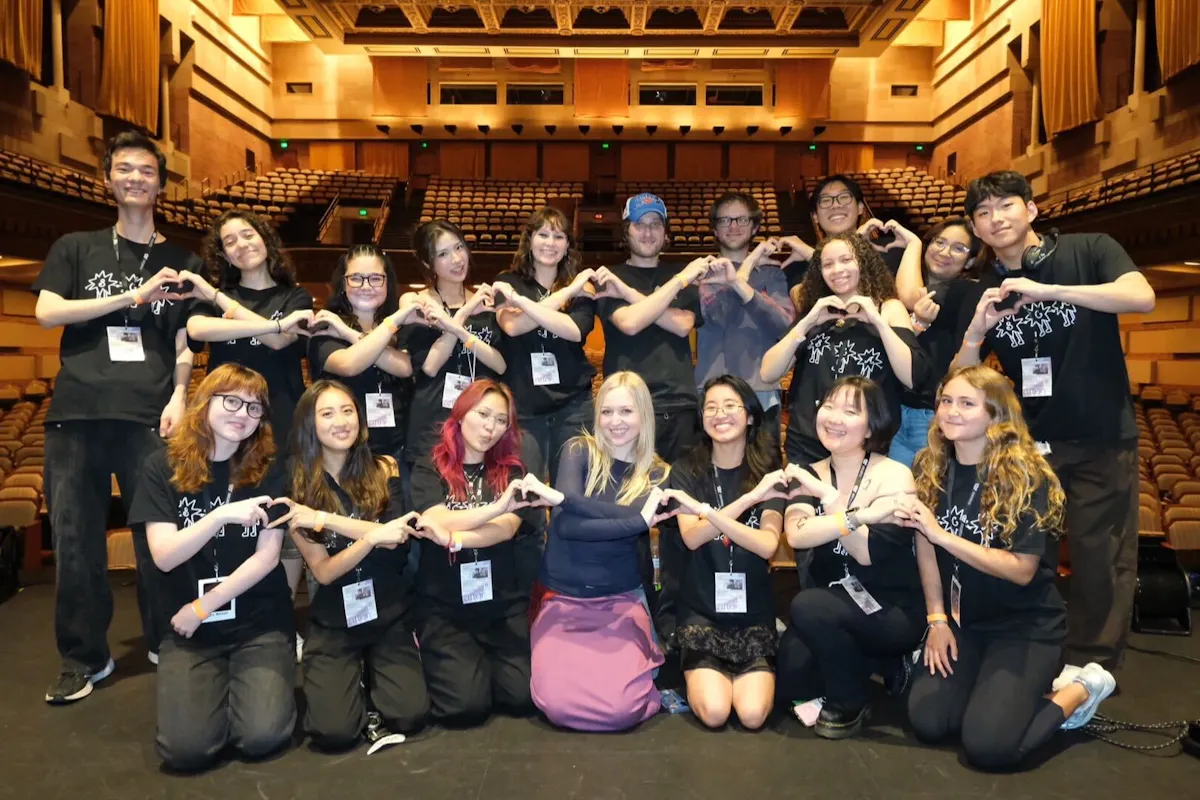
Three passionate arts advocates, each with a strong music practice, reflect on how they embraced the arts during their time at UCLA
Sophia Yi recalls spending whole show standing at the side of The Nimoy stage during a drag show that UCLA's Student Committee for the Arts (SCA) produced. She watched the crowd and the artists It was 8 p.m. on a Tuesday at the Nimoy, and the vibes were high. As co-chair of SCA, watching it land was extremely satisfying.
“I finally understood what it’s like to be a performer,” she said. “These people were so committed.”
Yi joined SCA as a third year and co-chaired SCA as a senior. She graduates with a double major in statistics and Spanish. She also grew up classically trained in music, singing from childhood. But, before SCA, she hadn’t really called herself an artist.
SCA is a program that operates under the umbrella of UCLA's Center for the Art of Performance, and the group of student curators and presenters often collaborate closely to program additional experiences related to CAP UCLA's season.
Last year, she designed the pamphlet for the pre-show event for jazz artist Cécile McLorin Salvant — a booklet about women in jazz, printed and handed to the audience at Royce Hall.
“That was the first time I had seen something I made digitally be printed in real life,” she said. “It made me realize that anyone can be an artist,” she said.
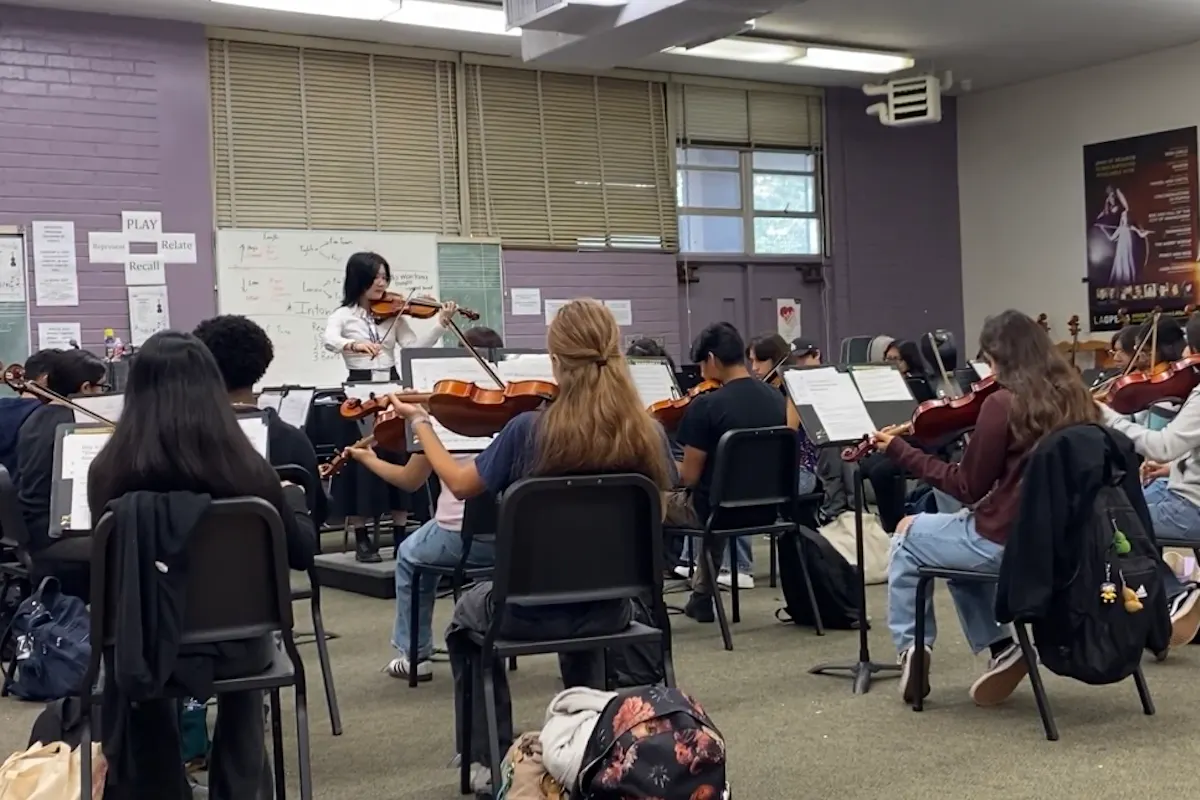
In her final quarter at UCLA she participated in The Herb Alpert School of Music’s popular African American Music Ensemble (affectionately known as the Gospel Choir), led by professor Diane White-Clayton (affectionately known as Dr. Dee)
“It’s changed my life, she said.
She’s already thinking about where she’ll find her arts community after graduation. Not with anxiety, but with anticipation, trusting in what she’s learned as an arts leader at UCLA.
Angel The found her arts community at the Hammer Museum, where she worked as a student educator for three years. She came to UCLA as an anthropology student and took as many opportunities as she could to expand her academic ambitions. Between her junior and senior year she worked several music industry internships in quick succession, but that environment wasn’t quite the right space. She wanted to be surrounded by people who make art.
The Hammer is free, community-facing, built around making art accessible to people who’ve never had access to it. One of The’s most formative experiences, she said, was the Classroom in Residence program, which brings in a class of elementary school students to the museum for five days of gallery time and artmaking.
She worked every day of one residency and led the final tour.
“By the end of the week, you could really see the difference in how the kids were looking at the art,” she said.
The has a Getty Marrow undergraduate internship this summer and after graduation she’s moving to New York to pursue a career in museum education. Her own creative practice is rooted in music. She plays Chinese harp and is building solenoid (electromagnetic coil-based) percussion instruments with her father, working at the edge of art and engineering.
Bridget Cline is a history major and a California-native transfer student whose work at the Fowler Museum this year involved researching the museum’s wide-ranging oceanic collection, tracing auction records and questions of ethical return. In the spring she took a seminar at the Clark Library organized around the theme of the 18th-century London home. Alongside eight other students, Cline spent five weeks in the Clark archives. Cline found Mary Wollstonecraft’s journals and found a globe so small (and old) that California wasn’t even on it.
"The Clark is such a hidden gem of UCLA," she said.
The Eagles are the through-line of Cline's personal musical life, from the first song she learned on guitar to her first big concert with her dad. Next she’s considering law school, specifically cultural heritage law and repatriation.
There’s something she learned as a history major that has stayed with her.
No matter how far back you look, she said, certain things never change.
Archaeologists excavating Pompeii found graffiti scratched into the walls — people writing that they were there, someone sketching images of gladiators, ancient and insistent scrawls that felt familiar.
“There’s just something inherently shared between all of us,” she said. “We want to be seen, and want to make others see us, and want to feel understood.”